
A single bead of mold-resistant silicone can help protect a commercial sink or countertop for up to 20 years. Products like SILICONE ULTRA™ offer this protection against mold and mildew while being safe for incidental food contact.
Explore more about Silbond
In every commercial kitchen and food-processing area, selecting an NSF Approved Silicone Sealant is critical. NSF certification from NSF International shows that a product has passed rigorous testing and audits. These steps ensure the product meets high public-health standards.
Specifiers and maintenance teams seek out NSF approved silicone sealant and NSF sealant labels. These products must satisfy strict requirements for leachables, adhesion, and resistance to microbial growth. A true food grade silicone sealant should also provide flexibility, low shrinkage, and quick water readiness. SILICONE ULTRA™ is a strong example, becoming ready for water exposure in roughly 30 minutes.
Manufacturers such as Dow (DOWSIL) and Xiameter provide food-zone RTVs rated for temperatures up to 500°F in ovens and grills. These manufacturers also share guidance for pigment masterbatching. Such technical knowledge is essential for ensuring compliance, durability, and safety in food service equipment.
Important Takeaways
- NSF Approved Silicone Sealant indicates independent testing for sanitary use in food areas.
- NSF approved silicone sealant and NSF sealant labels help lower the risk of contamination and microbial growth.
- A food grade silicone sealant should deliver flexibility, minimal shrinkage, and rapid water readiness.
- High-temp formulations from DOWSIL and Xiameter reach 350°F–500°F for heating applications.
- Always select products backed by documented NSF listings and technical data sheets for compliance.
What NSF Certification Means For Silicone Sealants
The NSF mark shows that a product meets strict public-health standards, which is essential in food service and water systems. Those responsible for specification and maintenance need a clear understanding of NSF approval. It helps identify which materials are safe for use with food or inside food equipment.
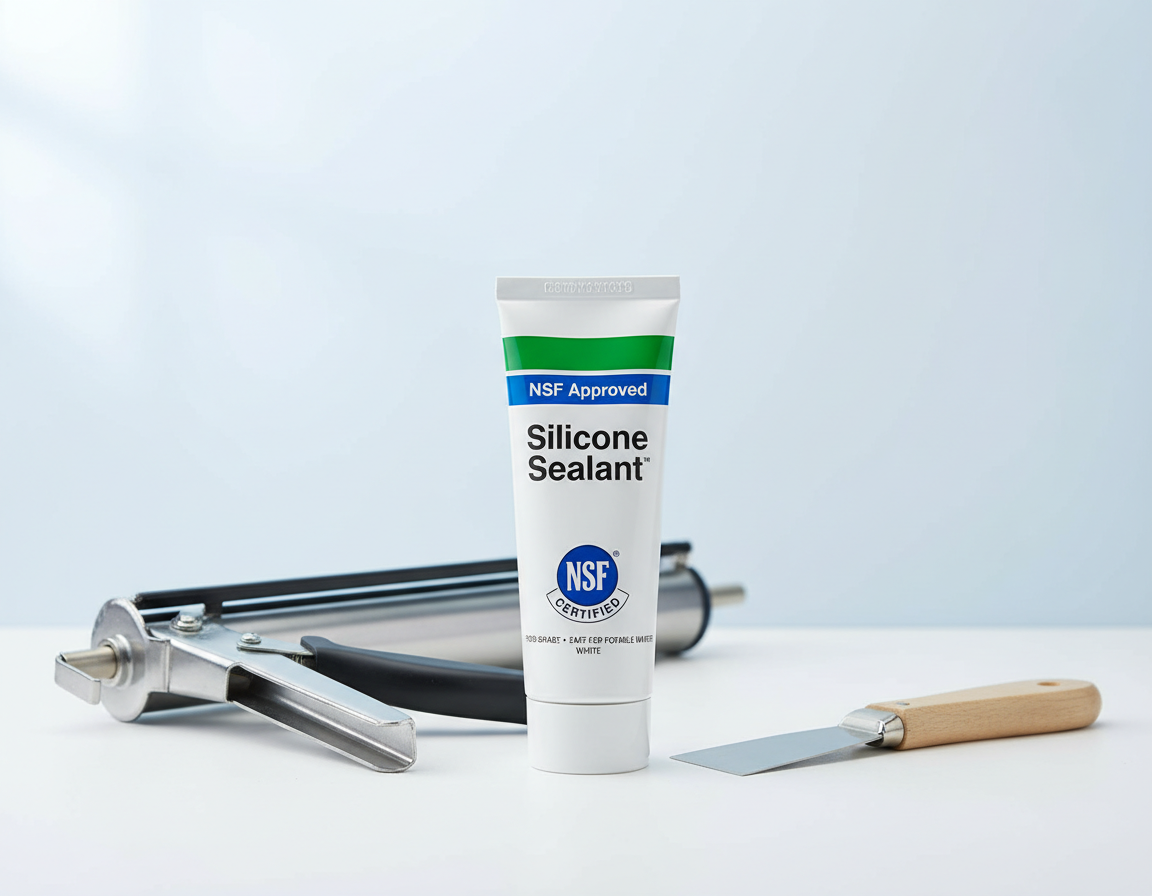
Overview Of NSF International And Its Role In Protecting Public Health
NSF International is an independent nonprofit organization with more than 60 years of experience in food and water safety standards. It is a trusted resource for regulators and facility managers to ensure compliance with material choices. For sealants, NSF certification means an independent third party has reviewed safety, labeling, and performance claims.
Scope Of NSF Certification For food service Materials And Products
NSF certification encompasses a broad spectrum of equipment and parts in commercial kitchens. Examples include refrigerators, ice machines, dishwashers, and cooking equipment. To maintain equipment certification, sealants and adhesives used in manufacturing, installation, or repairs must also comply with these standards.
Testing, Material Review, And Facility Audits Required For Certification
The certification process involves lab testing of raw materials and finished products. It assesses food-safe formulations, leachable contaminants, and antimicrobial concerns. To keep NSF approval, manufacturers undergo yearly facility audits and follow-up testing of products.
For installers and specification writers, choosing an NSF approved silicone sealant or adhesive is a practical decision. It protects equipment listings and supports long-term sanitation goals by lowering the risk of inspection-related noncompliance.
Why NSF Approved Silicone Sealant Matters
When selecting sealants for food service environments, buyers and specifiers seek specific language. The label NSF Approved Silicone Sealant indicates compliance with NSF International standards. This specific phrase is critical in project specs and on inspection paperwork. This wording confirms that the product has met documented testing and audit requirements.
The term NSF certified silicone sealant signifies a product that has undergone material composition checks, performance tests, and production oversight. For architects and facility managers, this certification offers reassurance when specifying a silicone sealant in commercial kitchens where incidental food contact is possible. It also helps ensure inspectors and health departments will accept the product without extra paperwork.
With NSF approval, a sealant can be specified for a wider range of food service equipment and nearby areas. An NSF approved sealant is suitable for sealed joints on equipment such as walk-in coolers, ice machines, and griddles. Using an NSF approved silicone sealant in specifications helps reduce compliance risks in restaurants, concession trailers, and catering equipment.
Manufacturers provide technical data sheets for NSF-certified products, confirming their suitability for food-adjacent uses. For example, Everkem Diversified Products’ TruSil 100 and Hi-Temp Silicone are NSF listed and meet code-compliance requirements. These NSF certified silicone sealant options are widely used in commercial kitchens and equipment, where durability and safety are essential.
| Product | Primary Use | Key Feature | NSF Status |
|---|---|---|---|
| TruSil 100 | food service equipment seals and ice machines | Food-safe formula with good adhesion to metal and tile | NSF-certified silicone sealant |
| Hi-Temp Silicone | Ovens, griddles, range hoods | High temperature tolerance, stable cure | NSF Approved Silicone Sealant |
| SILICONE ULTRA™ | Countertops, sinks, and food prep areas | Safe for incidental food contact and resistant to mildew | NSF approved sealant |
Use the exact phrase NSF approved silicone sealant when drafting specifications. Request both the manufacturer’s NSF listing and the technical data sheet. This approach streamlines approval and ensures the chosen silicone sealant for commercial kitchens meets regulatory standards and daily operational demands.
Key Properties Of Food-Grade Silicone Sealants For Safety And Performance
Hygiene, heat resistance, and durability are essential factors when selecting a food-grade silicone sealant. Manufacturers like SILICONE ULTRA™, Everkem, and DOWSIL publish detailed data on mold protection, temperature limits, and cure behavior. These factors are critical in kitchens, food processing lines, and wet environments where cleanliness and efficiency matter most.
Food-Safe Formulations And Resistance To Microbial Growth
Sealants marketed as food-safe use neutral-cure chemistries and non-toxic additives. SILICONE ULTRA™ offers up to 20 years of mold and mildew protection along with minimal shrinkage for a durable finish. That makes it well suited for washdown zones. Everkem’s TruSil 100 offers mildew-resistant silicone blends, ensuring sanitary surfaces and reducing cleaning needs.
Temperature Ranges And High-Temp Options
Many food-zone RTVs are reliable up to about 350°F. Applications involving grills, smokers, and heating elements require high-temperature silicone. DOWSIL products, such as DOWSIL 736 and Xiameter SLT-5202, resist heat up to 500°F. Hi-Temp Silicone from Everkem withstands up to 600°F and is suitable for continuous or occasional high-heat applications.
Waterproofing, flexibility, shrinkage, and cure time
Exposure to water requires fast, dependable curing times. Some formulas can be ready for water in less than 30 minutes, helping speed reassembly and minimize downtime. Flexible chemistries help resist movement and thermal cycling, and low-shrinkage formulations help prevent gaps where bacteria can develop. In industrial joints and equipment seals, options such as silicone RTV 4500 and RTV 4500 silicone balance strong adhesion with flexibility.
| Property | Typical Value or Example | Why It Matters |
|---|---|---|
| Microbial Resistance | SILICONE ULTRA™: up to 20 years; TruSil 100: mildew-resistant formulas | Limits mildew and mold growth on sealant surfaces for safer food zones |
| High-Temperature Rating | DOWSIL 736 / Xiameter SLT-5202: up to 500°F; Everkem Hi-Temp Silicone: up to 600°F | Permits use on griddles, ovens, and heating elements without breaking down |
| Cure Time to Water Exposure | Some products are ready for water in about 30 minutes (SILICONE ULTRA™ example) | Helps speed maintenance and reduce downtime in wet areas |
| Shrinkage & Flexibility | Low shrinkage and high elasticity; crackproof finish claimed by SILICONE ULTRA™ | Maintains continuous seals under movement and thermal cycles |
| RTV / Industrial Options | silicone RTV 4500, RTV 4500 silicone; DOWSIL 3-7132 and 786; Xiameter SLT-5201 | Broad choices for adhesion-promoted, non-corrosive, and mildew-resistant needs |
| Color & Pigment Guidelines | Clear RTV plus ~2% color masterbatch for custom shades (manufacturer guidance) | Supports color consistency while maintaining performance and FDA compliance |
Common NSF-Certified Products And Similar Trade Names
There are several NSF-approved silicone sealants on the market for food service and plumbing use. Buyers often compare these products to find the best match for temperature ratings, mildew resistance, and color options. Premium lines are available for stone surfaces, high-temperature service, and general food-zone sealing.
Manufacturers generally position their products clearly. SILICONE ULTRA™ is marketed as a premium sealant for kitchens, baths, and plumbing. It is safe for incidental food contact and suitable for granite and marble. The TruSil 100 family is listed in distributors’ catalogs with common colors and mildew-resistant formulas. For ovens and grills, Hi-Temp Silicone is commonly recommended because of its sustained heat tolerance.
RTV and industrial-grade options are common in spec sheets. Trade names like rtv4500, RTV 4500, and silicone RTV 4500 describe high-performance RTV adhesives for repairs and heavy-duty installations. Such RTV products offer heat resistance along with custom color masterbatch options for visible finishes.
Buyers often use branded lines from major suppliers as points of reference when judging suitability. DOWSIL and Xiameter families function as comparable trade names for food-zone silicones and industrial RTV adhesives. A comparison against TruSil 100 and Hi-Temp Silicone helps highlight differences in performance and NSF listing status.
Silbond and Silbond Corp operate as market reference points. Supplier evaluations should compare silbond offerings with Everkem Diversified Products, DOWSIL, and Xiameter for adhesion, mildew resistance, temperature limits, and verified NSF certification. The right choice depends on the application and required documentation.
| Product or Trade Name | Typical Strengths | Common Uses | Notes on NSF or Spec References |
|---|---|---|---|
| SILICONE ULTRA™ | Premium finish, safe for stone, mildew resistant | Kitchen joints, countertops, and bath fixtures | Positioned for incidental food contact and granite/marble |
| TruSil 100 | Color range, mildew formulations, versatile adhesion | food service seals, sink areas, and tile joints | Listed by distributors as an NSF-certified family |
| Hi-Temp Silicone | High temperature tolerance, durable bond | Ovens, grills, heating elements | Often specified for demanding food service environments |
| rtv4500 / RTV 4500 / silicone RTV 4500 | Industrial RTV performance, heat and chemical resistance | Equipment repairs, adhesive gasketing, and industrial joints | Common trade mention in technical spec sheets |
| DOWSIL / Xiameter product lines | Established formulations, wide product families | Food-zone silicones, industrial RTVs, custom finishes | Comparable trade names frequently used by spec writers and contractors |
| Silbond (Silbond Corp) | Market reference, supplier-focused offerings | Supplier comparisons, regional distribution | Buyers should compare listings, adhesion values, and temperature ratings |
Applications In The Food Industry And Commercial Kitchens
The right sealant is essential for maintaining a kitchen’s safety and hygiene. Commercial kitchens depend heavily on silicone sealant to close gaps, stop water leaks, and limit microbial growth. This is critical in areas like sinks and drains.
Common application areas include walk-in coolers, ice machines, ovens, ranges, countertops, tile joints, and drains. For health-department compliance, NSF sealant is often required in meat lockers, concession equipment, vending trucks, and produce transport units.
For repair and maintenance work, NSF-listed products are essential. Common uses include gasket replacement, countertop resealing, and drain-interface repairs. Using a silicone sealant during installation helps protect warranties and maintain equipment sanitation ratings.
High-temperature zones near griddles, smokers, and ovens require heat-resistant silicones. Wet zones and dishwash stations require mildew-resistant formulas to control microbial growth and extend service life.
Using NSF-certified sealants in food service applications lowers cross-contamination risks. This supports compliance and helps prevent equipment certification from being voided. Brands like Dow and SILICONE ULTRA™ offer specialized products for various surfaces, including granite, marble, and stainless steel.
Overall, selecting the right sealant is a key decision. It should align with the application’s requirements, including water exposure, temperature, substrate, and regulatory compliance. This helps keep kitchens sanitary, compliant, and prepared for inspections.
Choosing The Right NSF Certified Sealant For Performance And Compliance
Choosing the right sealant is critical for safety and efficiency in food service environments. It’s essential to follow specific criteria when selecting an NSF certified sealant. Even small formulation differences can significantly affect long-term performance.
Temperature rating
The sealant should be selected to match the environmental temperature range. Many silicones for food zones can handle up to 350°F. For higher temperatures, products like DOWSIL 706, 700, and 736 can reach 400°F–500°F, ideal for grills and ovens.
Color Selection And Pigment Control
If color is being specified, request a color masterbatch. A common practice is to blend Xiameter pigments at around 2% into an approved clear RTV for consistent batches. Confirm through the technical data sheet whether a custom color is approved for repeated use or only a one-time application.
Mildew Resistance And Cure Speed
For wet areas, select products that offer mildew protection and minimal shrinkage. SILICONE ULTRA™ offers mildew resistance and a quick water-ready cure near 30 minutes. That makes it especially useful when fast repairs and minimal downtime are important.
Adhesion and substrate compatibility
Adhesion-promoted sealant formulations enhance bonding to challenging surfaces. DOWSIL adhesion-promoted sealants can adhere to various materials like granite, marble, glass, metal, and glazed tile. To ensure compatibility, adhesion testing and TDS confirmation are required.
Regulatory Alignment
Knowing the difference between NSF listing and FDA statements is essential. For projects that require both, compare silicone adhesive products carrying NSF approval with products claiming FDA compliant silicone sealant status. Full technical documentation and NSF listings should be requested to verify material composition and approved uses.
Practical checklist
- Confirm maximum and continuous temperature ratings for the intended exposure.
- Request a color masterbatch sample and batch tolerances for visible joints.
- Check mildew resistance, cure time, and the water-ready window against service schedules.
- Request adhesion testing or primer guidance for non-porous stone and metal surfaces.
- Obtain NSF listing and compare with FDA compliant silicone sealant declarations in the TDS and SDS.
| Factor | What to Verify | Typical Spec or Example |
|---|---|---|
| Temperature Rating | Max continuous and peak temps, oven/grill exposure | 350°F for food-zone use; DOWSIL 706/700/736 for 400–500°F |
| Color Control | Consistency of color masterbatch and pigment loading | Xiameter pigment at ~2% blended into clear RTV |
| Mildew & Cure | Mildew protection, shrinkage level, and time to water-ready | SILICONE ULTRA™: mildew resistant, water-ready ~30 minutes |
| Adhesion | Adhesion-promoted options, primer needs, substrate testing | Adhesion-promoted sealant with DOWSIL primers for granite and metal |
| Regulatory | NSF listing number, FDA compliance statements, TDS/SDS | Request the NSF listing and confirm FDA compliant silicone sealant claims |
How To Specify And Source NSF Approved Silicone Sealant
To avoid delays, clearly state the performance requirements in specifications. Confirm that the sealants are listed in the NSF database for food service applications. They should meet maximum temperature requirements and provide mildew resistance in wet environments. Request manufacturer support for color matching and project guidance.
Spec language for architects, contractors, and service technicians
Specifications should use clear and specific language. Require the NSF certification number and identify the testing scope. Be specific about cure times and adhesion properties. Ensure compatibility with substrates like stainless steel, granite, tile, and glass. Request both the technical data sheet NSF silicone and a product sample for color matching.
Where to buy and approved distribution channels
Buy from verified channels to ensure authenticity and traceability. An authorized distributor for NSF-approved options is Installation Parts Supply. Dow (DOWSIL/Xiameter) and Everkem also provide direct sales and verified documentation. Before awarding contracts, confirm supplier status among NSF certified sealant suppliers.
Procurement Documentation To Request
Request current NSF listings or links to NSF entries and the technical data sheet NSF silicone. Maximum temperature ratings, shelf life, and repeated-use restrictions should all be verified. Request color masterbatch RTV guidance from manufacturers; typical pigment loading guidance is near 2% to maintain certification and cure performance.
| Item | Why It Matters | What to Request |
|---|---|---|
| NSF listing number | Confirms the product is certified for food service contact and cleaning | A copy of the NSF entry or manufacturer-provided verification |
| Technical Data Sheet NSF Silicone | Shows curing time, temperature limits, adhesion, and mildew resistance | Full PDF with performance charts and application guidance |
| Color Masterbatch RTV | Ensures color match without compromising certification | Manufacturer pigment guidelines and sample swatches |
| Authorized Distributor Confirmation | Prevents counterfeit products and supports warranty claims | Distributor name, contact, and proof of authorization (Installation Parts Supply or equivalent) |
| Manufacturer technical support | Provides project advice and troubleshooting | Contact information for product specialists (for example, SILICONE ULTRA™ support) |
Bid documents should include submission requirements such as the NSF listing, manufacturer SDS, and the technical data sheet NSF silicone for each product. Require suppliers to indicate whether color masterbatch RTV additions are permitted and to confirm final cure properties after pigmentation. Using this approach helps maintain project schedules and compliance with food service standards.
Best Practices For Application, Curing, And Long-Term Sealant Maintenance
The manufacturer’s guidelines should be followed carefully when applying NSF approved silicone sealant. Brands like SILICONE ULTRA™ and DOWSIL provide detailed instructions on surface preparation, bead size, and curing times. Make sure substrates are clean, dry, and free of contaminants to achieve optimal adhesion. Adhesion-promoted formulations should be used for surfaces like granite, stainless steel, and glazed tile.
Document NSF listings, technical data sheets, and batch/lot numbers. This paperwork is essential for inspectors and facility managers when verifying compliance during audits.
Be mindful of the curing milestones for silicone sealant. SILICONE ULTRA™ indicates readiness for water exposure in about 30 minutes for specific formulations. Yet, full cure for heavy-duty or high-temperature applications may take longer. In high-heat situations, DOWSIL’s recommendations for color masterbatch ratios and re-use limits should be followed carefully.
Correct curing helps prevent shrinkage, preserve flexibility, and reduce microbial risks in food zones.
A routine inspection and maintenance schedule should be implemented based on the specific environment. Inspect for deterioration, including cracks, color changes, loss of adhesion, or mold staining. Sealant should be replaced before breaches develop. For products like RTV4500, adhere to recommended maintenance intervals and replacement practices to ensure sanitary seals.
Keep maintenance records for NSF approved silicone sealant to show proactive food-safety stewardship.
When repairing or reinstalling, use only NSF-certified materials to safeguard equipment certification. Full cure should be allowed in accordance with the technical data sheet before joints are exposed to heat, moisture, or strong cleaning chemicals. These steps — correct prep, attentive curing, documented maintenance, and proper rtv4500 care — ensure food service equipment remains compliant and sanitary over time.